Best Lead Generation Software for 2025
By Nitin Bajaj on 2025-11-03

1. Introduction
In 2025, the most successful businesses are not the ones working harder they are the ones automating smarter. Lead generation has become more competitive, customer attention span is shorter than ever, and prospects expect instant responses. This is why lead generation and marketing automation tools are no longer optional. They capture leads instantly, send follow-ups automatically, and convert website visitors into customers even when you’re not online.
If you’re spending hours every day replying to inquiries, sending emails manually, updating CRM, or following up with prospects automation can replace 80% of that workload. And the best part? It doesn’t require coding, a team, or a big budget. With the right lead generation software, any business — startup, agency, freelancer or offline business going digital — can automate sales and grow consistently.
In 2025 the reality is simple----------------
Manual lead generation = slow compounding. Automated lead generation = scalable compounding.
This is why your brand website must not just exist, it must collect, process, qualify and route leads automatically.
If you already have a website, that’s great.
If you do not have one, please invest into a proper website before anything else.
(Example: here is an example business website experience:Check Out My Portfolio Website)
The role of your website in automation
Your website is the main node where automation starts.
When someone lands on your:
If they are reading these pages and there is no mechanism to move them forward, then traffic is being wasted.
Automation closes that gap.
Also — always maintain one direct contact pathway:
https://nitinbajaj.aidigitalservice.in/contact.html
In 2025 automated marketing is no longer optional.
It is critical infrastructure.
Table of Contents
- Introduction
- Why Automation is a Non-Negotiable Advantage in 2025
- The Mindset Before Adopting Business Automation
- The 6 Tools That Automate Lead Generation in 2025
- How to Connect Your Automation Stack Practically
- Common automation mistakes most founders make
- Example Automation Workflow for Small Business
- Final Recommendation for Business Owners in 2025
- Book Your FREE Strategy Call
- FAQ (Most Important Questions Answered)
2. Why automation is a non-negotiable advantage in 2025
Sales in 2025 are driven by speed, automation and personalization. If a business is not using marketing automation tools, it falls behind instantly. The difference between a company that automates and another that works manually is not small it’s the difference between unpredictable survival and predictable growth.
Here’s what customer behaviour looks like today: when someone shows interest, they expect immediate follow-ups, reminders and pricing details. A business that still relies on manual systems loses leads every single day. Meanwhile, a business using lead generation software responds instantly, nurtures prospects automatically and keeps them engaged until they convert.
With business automation, even a one-person team can run like a 10-member sales and marketing department without burnout. The goal is not to replace humans but to eliminate repetitive tasks: collecting leads, updating CRM, qualifying prospects, scheduling demos and sending offers. That’s why lead generation and marketing automation are not optional anymore they are the foundation of scalable business in 2025.
To put it simply:
If you automate follow-ups and nurturing → you close more deals.
If you depend on manual effort → you lose ready-to-buy customers.
This is why automation is the biggest competitive advantage in 2025, and businesses that start early will dominate their market.
This is the core argument of this article:
Automation is not a “nice upgrade” it is a baseline requirement for competitive survival.
3. The mindset before adopting business automation
Before you start using lead generation tools or marketing automation software, the most important step is mindset. Automation is not only a set of tools it is a shift in how you treat your time, team, and growth. Many founders delay business automation because they believe, “I will automate later, when I get more sales.” But in reality, more sales happen only when you automate.
A business owner needs to understand one thing clearly:
Automation doesn’t replace effort — it multiplies it.
Instead of manually generating leads, manually writing follow-ups, and manually remembering which prospect replied last, lead generation software takes over repetitive work so that you can focus on strategy, product, fulfilment, and scaling.
However, accepting automation requires 3 mindset changes:
1️⃣ Stop believing “only I can do everything”
Most founders think they must personally reply to every lead — but this is what limits growth. With marketing automation tools, your systems follow up automatically with the same clarity, tone and professionalism you set once.
2️⃣ Think system-based, not person-based
Manual sales depend on people → if someone is tired or busy, follow-ups stop.
Automated sales depend on systems → follow-ups happen 100% of the time.
This consistency is what separates fast-growing companies from struggling ones.
3️⃣ Value time more than tasks
Before automation, tasks feel like work.
After automation, closing deals and scaling feels like work — not sending emails or tracking spreadsheets.
When you adopt the right mindset, business automation becomes a superpower not an expense, not a “tech headache,” and not something to fear.
💡 Reality of Founders Who Succeed With Automation
Successful founders don’t automate because they are already big.
They become big because they automate early.
They understand:
Automation ≠ extra software expense
Automation = predictable revenue + saved time + higher lifetime value
Once this mindset is clear, choosing lead generation and marketing automation tools becomes simple and applying them becomes fast.
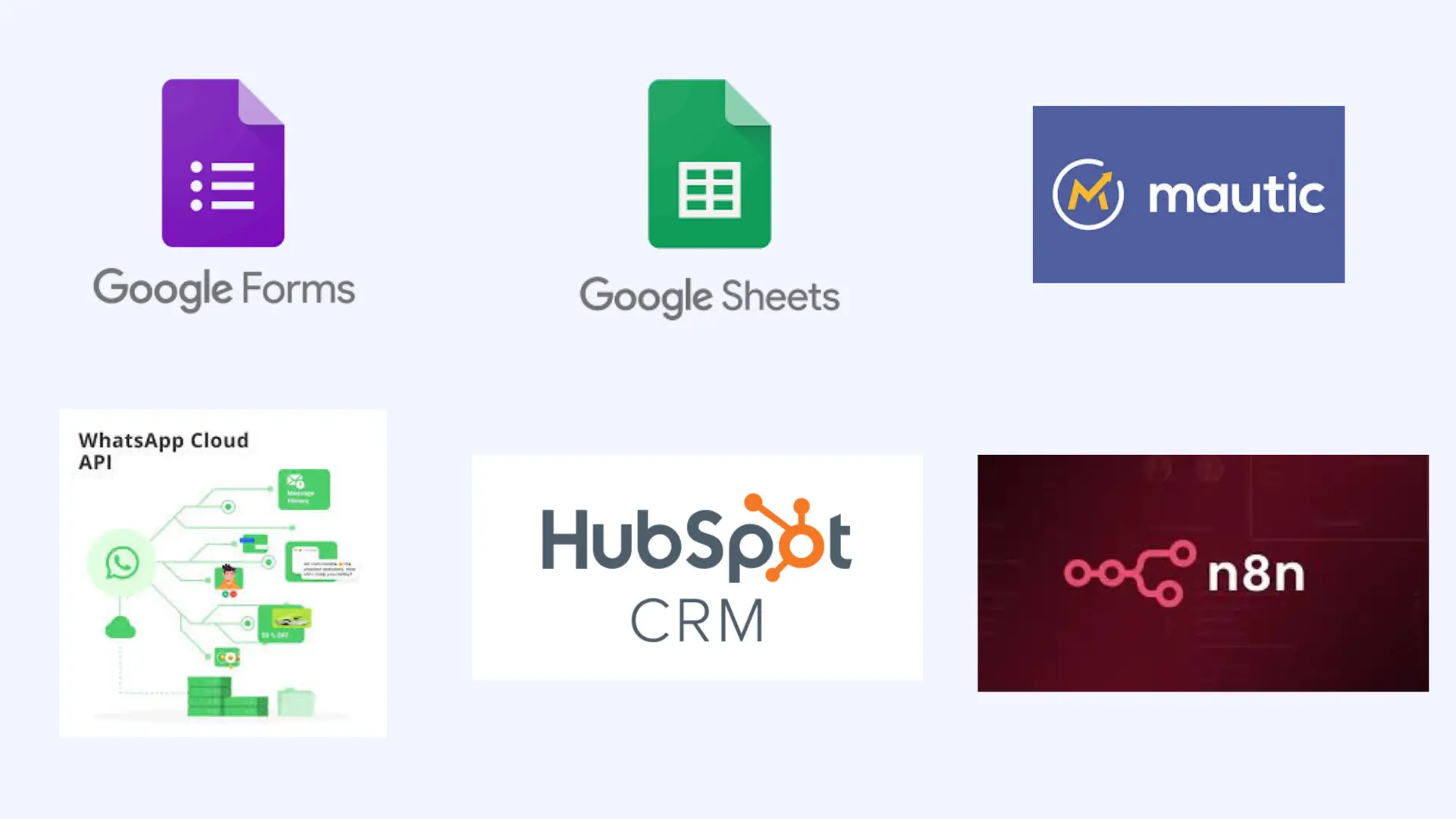
These 6 are selected not because they are famous but because they produce business leverage.
Type: - Open-Source Marketing Automation Platform
Mautic is an open-source marketing automation software that provides high-level lead nurturing, drip campaigns, tagging, segmentation, and dynamic email workflows without expensive monthly subscription fees. It gives full ownership of your automation system and data.
Key Features
Advanced lead scoring & segmentation
Multi-step customer journeys & workflows
Dynamic landing pages and campaign triggers
Full control over messaging and automation logic
Pricing
Free (self-hosted) — only server cost
Paid cloud version available
Best For
Agencies, SaaS companies, coaches, and founders who want complete automation control and scalability.
Ideal Automation Use Case
Website → Mautic workflow → lead score → automated nurturing → handover to sales only when the lead is hot.
Pros
✔ Unlimited contacts
✔ No subscription pressure
✔ Enterprise-grade automation
Cons
✖ Initial setup is technical
✖ Server management required if self-hosted
Business benefit: -
Mautic gives you enterprise-level automation without enterprise-level cost.
Brands looking for full automation builds should consult expert agencies like:
AI Digital Service
Type: - Workflow Automation Platform (Open Source)
Category fit: free workflow management software, Workflow automation tools list
n8n is a powerful workflow and business automation tool that helps companies create custom lead funnels and integrations at a fraction of the cost of Zapier. It connects apps like HubSpot, WhatsApp, Google Sheets, CRMs, email tools, and ad platforms to build end-to-end automation.
Key Features
400+ native integrations
Conditional logic & complex routing
Visual workflow builder
Hosted & self-hosted versions
Pricing
Free (self-hosted)
Affordable cloud plans
Best For
Businesses that want fully customized lead generation automation workflows without touching code.
Ideal Automation Use Case
Facebook Lead Ad → n8n → CRM update → WhatsApp/email follow-up → assign task to sales → track status.
Pros
✔ 10x cheaper than Zapier
✔ Unlimited workflow flexibility
✔ Integrates with almost everything
Cons
✖ Takes 1–2 days to understand the platform
Category fit: Zoho automation tool (excellent for automation tools for small business category)
Zoho Marketing Automation is a complete lead generation + lead nurturing + sales attribution system designed for small and mid-sized businesses. It combines CRM, landing pages, email, SMS, scoring, and analytics in one platform.
Key Features
Customer journey builder
Real-time sales funnel tracking
AI-powered lead scoring & segmentation
Email + SMS + push notification automation
Pricing
Paid plans — budget-friendly for SMBs
Best For
Companies that want an all-in-one lead engine instead of using multiple disconnected tools.
Ideal Automation Use Case
Website → Zoho → email/SMS drip → qualification → automated sales assignment.
Pros
✔ No tool switching
✔ Strong analytics
✔ Designed for teams
Cons
✖ Beginners may find the interface slightly complex
This is the most affordable lead generation automation setup for startups and local businesses. Google Forms collects leads, Google Sheets stores them, and the stack can connect with n8n / Zapier / Pabbly to trigger automation workflows.
Key Features
Zero learning curve
Clean database + easy reporting
Integrates with CRMs & email automation tools
Pricing
100% Free
Best For
Freelancers, local businesses, and startups that want automation without monthly software expenses.
Ideal Automation Use Case
Form → Sheet → automatic email + WhatsApp follow-ups → reminders → conversion.
Pros
✔ No cost
✔ Extremely easy to implement
✔ Works with every other tool
Cons
✖ Not scalable for very large lead volume
Category fit: This platform genuinely sits inside the best free automate business tools category in fact many founders count it amongst the most reliable free business automation tools for early-stage operations.
HubSpot’s free plan gives businesses powerful lead management + nurturing + sales pipeline automation features at zero cost. It’s the best starting point for non-technical founders.
Key Features
Email sequences & templates
Meeting scheduler + call tracking
Deal pipeline automation
Chatbot + live chat + forms
Pricing
Free forever
Premium add-ons available
Best For
Businesses that want a free CRM + follow-up automation + deal tracking in one dashboard.
Ideal Automation Use Case
Website visitor → HubSpot form → workflow → automated follow-ups → meeting booking → deal closure.
Pros
✔ Market-leading CRM
✔ Beginner-friendly
✔ Scales as your business grows
Cons
✖ Some advanced features are expensive
The WhatsApp Cloud API is a conversion-focused automation tool that dramatically improves follow-up response rates. Automated WhatsApp messages deliver instant replies, reminders, product links, and consultation invites which accelerates sales decision-making.
Key Features
Auto-replies with pre-approved message templates
WhatsApp drip sequences
Abandoned lead recovery
Human handover to sales when needed
Pricing
Pay-as-you-go (official Meta billing)
Best For
Industries where prospects prefer WhatsApp communication — education, fitness, coaching, ecommerce, finance, real estate, etc.
Ideal Automation Use Case
Lead submission → instant WhatsApp response → timed follow-ups → meeting confirmation → conversion.
Pros
✔ 5–10× higher reply rate vs email
✔ Converts hot leads quickly
✔ Builds trust faster
Cons
✖ Requires an API solution provider for onboarding
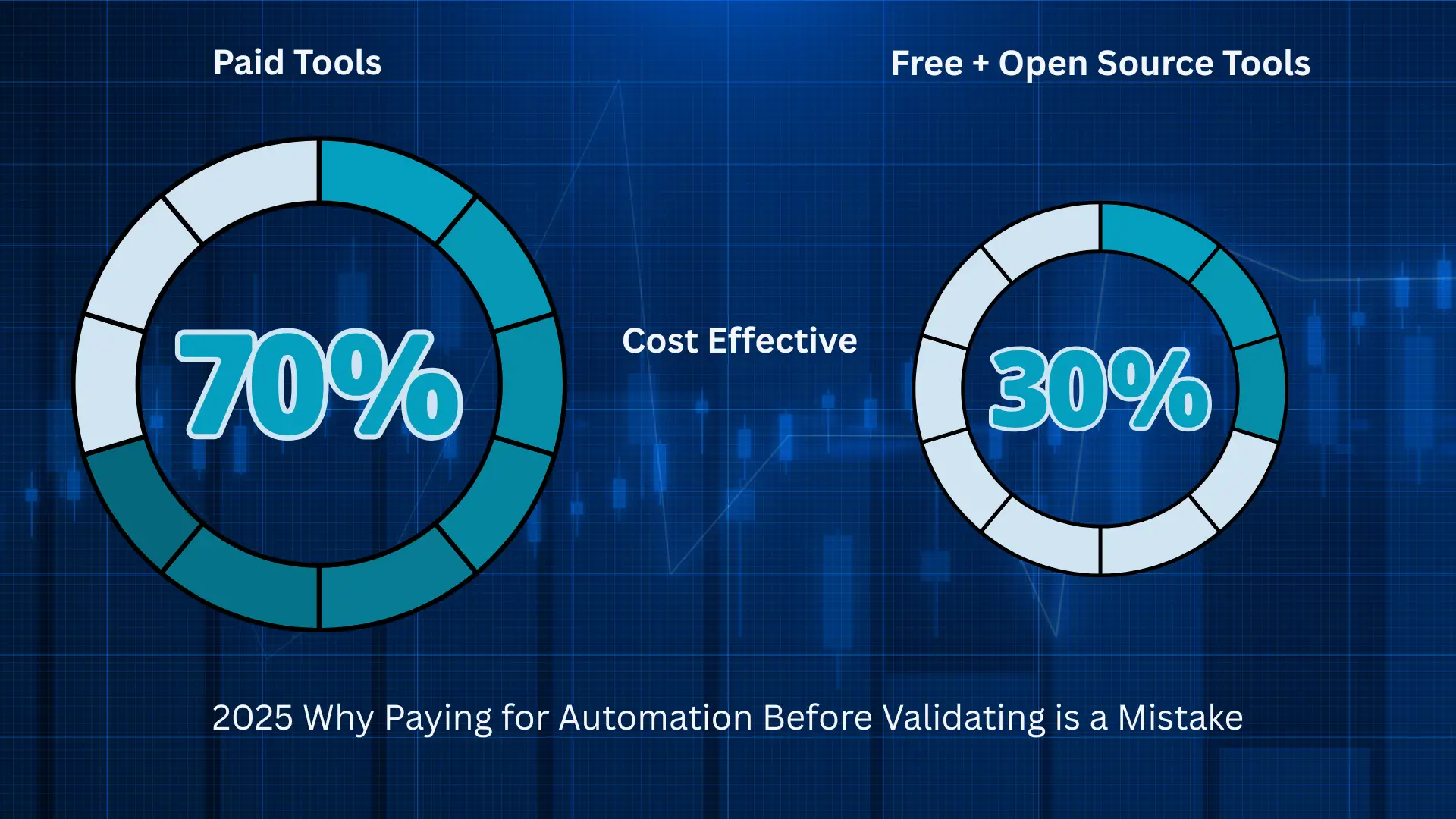
5. How to connect your automation stack practically
Business automation sounds complex only when you think of tools separately.
But when you connect them in a simple and logical flow, everything becomes smooth and predictable.
Here is the easiest way to understand the automation stack:
One tool collects the lead → One tool nurtures the lead → One tool closes the sale.
You don’t need 10 different platforms.
You only need a clear role for each tool.
| Business Stage |
Role in Automation |
Example Tools |
| Lead Capture |
Collect leads from website, ads & social platforms |
Google Forms / HubSpot Form / Zoho Form |
| Lead Database |
Centralized storage & visibility of leads |
Google Sheets / HubSpot CRM |
| Workflow Automation |
Move data and trigger automated actions |
n8n |
| Lead Nurturing |
Automated email sequences and follow-ups |
Mautic / Zoho Marketing Automation |
| High-Intent Follow-Ups |
Instant engagement through WhatsApp |
WhatsApp Cloud API |
| Sales Closing |
Pipeline, meetings and conversion tracking |
HubSpot CRM |
Once each tool has a specific purpose, automation becomes simple not technical.
🔥 What the flow looks like in real business
1️⃣ Someone fills a form on your website
2️⃣ Their details instantly move into your CRM or database
3️⃣ They immediately receive an email or WhatsApp message
4️⃣ They receive timed follow-ups automatically (without manual reminders)
5️⃣ When the lead becomes “hot,” your sales team gets notified
6️⃣ You close the sale through WhatsApp or a booked meeting
The entire process works even when you are sleeping or working on something else.
🧠 Logic Behind a High-Converting Automation Stack
The goal is not to just “automate for the sake of automation” — the goal is:
✔ No lead should be ignored
✔ No follow-up should be missed
✔ Sales should not depend on memory
✔ Revenue should become predictable
When these four points are achieved, automation becomes a profit generator, not a “tech setup.”
🌐 How your exact 6 tools work together
Let’s connect your toolset:
| Stage |
Tool |
Purpose in Lead Automation |
| Lead Capture |
Google Forms / HubSpot Form |
Collect leads with maximum simplicity and zero friction |
| Lead Database |
Google Sheets / HubSpot CRM |
Organize and store incoming lead information |
| Automation Engine |
n8n |
Connect apps and transfer data automatically across the stack |
| Nurturing & Scoring |
Mautic / Zoho Marketing Automation |
Deliver email sequences, score leads and build customer journeys |
| Conversion Follow-Up |
WhatsApp Cloud API |
Send instant WhatsApp responses and timed reminders to drive conversions |
| Sales Closing |
HubSpot CRM |
Track meeting bookings, deal progress and closed-won revenue |
The setup looks like this (simple version):
🎯 A mindset shift that makes setup easy
Business automation becomes difficult when founders think:
❌ “I need to automate everything at once.”
The real success formula is:
Automate one step → stabilize it → automate the next
Even automating just the follow-ups can increase conversions dramatically.
Form → CRM → Email + WhatsApp nurturing → Sales task → Deal closed
That’s it.
You don’t need to write code.
You don’t need to hire a tech team.
You only need a clear flow and the right configuration.
Automation is architecture. Not chaos.
6. Common automation mistakes most founders make
Business automation can create extraordinary results, but only when it’s implemented correctly. Many founders begin with the right intention, yet they unknowingly make decisions that limit automation’s impact instead of amplifying it. Understanding these common mistakes can save months of effort and prevent expensive do-overs.
❌ Mistake 1: Trying to Automate Everything at Once
The fastest path to automation success is progressive automation, not full automation.
Founders often attempt to automate every process simultaneously — emails, CRM, WhatsApp, workflows, onboarding, reporting — and they end up overwhelmed.
👉 The winning approach:
Start with one high-impact automation (lead follow-ups), stabilize it, then automate the next step.
❌ Mistake 2: Picking Too Many Tools Instead of Clear Roles
More tools ≠ better automation.
The problem is not the number of tools it’s the lack of clarity in their responsibility.
Example:
If two tools are handling lead nurturing, confusion is guaranteed.
👉 Automation succeeds when:
Every tool has a single purpose and no overlap.
❌ Mistake 3: Automating Before Defining the Customer Journey
Tools should never decide the automation flow.
The customer journey should.
Many founders buy software first and define automation later — which leads to inconsistent experience for prospects.
👉 Correct approach:
Map the buyer journey first → then assign automation tasks to the tools.
❌ Mistake 4: Zero Personalization in Follow-Ups
Automation isn’t about blasting mass messages.
Customers still expect human-like communication.
Cold follow-ups like “Hi, here’s our pricing” no longer work.
👉 High-conversion automation looks like:
Personalized messaging → sent at the right time → based on customer actions.
❌ Mistake 5: No Human Handover for Hot Leads
The goal of automation is not to replace people it’s to bring people in exactly when they are needed.
Many founders let automation continue even when the lead is high-intent and ready to buy. This leads to lost opportunities and frustration.
👉 Best practice:
Automate nurturing → handover to a human salesperson the moment buying intent is detected**.
❌ Mistake 6: No Tracking and Improvement
Automation is not a “set it and forget it” activity.
Businesses that scale continuously track:
✔ Response rate
✔ Follow-up delay
✔ Lead score jumps
✔ Booking rate
✔ Pipeline velocity
👉 Improving automation is what makes it unstoppable.
💡 Key Insight
Automation does not fail because of the tools.
It usually fails because of:
unclear workflow
complicated tech decisions
trying to do too much too quickly
lack of iterative improvement
Once these mistakes are avoided, automation becomes predictable, powerful and scalable.
7. Example Automation Workflow for Small Business
(Visual Step-by-Step Breakdown — No Technical Complexity)
A powerful automation workflow is built on a simple idea:
Right message → to the right lead → at the right time → automatically
Below is a real-world automation flow that a small business can implement using your exact tool stack:
📌 Complete Automation Flow (From Lead to Customer)
STEP 1 — Lead Capture
🡆 The prospect fills a form on the website / landing page / ad
🔧 Tool in action: Google Forms / HubSpot Form
⬇
STEP 2 — Lead is Stored Automatically
🡆 Lead gets added to a centralized database for visibility & tracking
🔧 Tool in action: Google Sheets / HubSpot CRM
⬇
STEP 3 — Automation Gets Triggered
🡆 As soon as the new row/entry appears, data is sent to other tools
🔧 Tool in action: n8n (workflow automation engine)
⬇
STEP 4 — Instant Welcome Message
🡆 The lead instantly receives a WhatsApp or email confirming their request
🔧 Tool in action: WhatsApp Cloud API / Mautic / Zoho
⬇
STEP 5 — Personalized Nurturing Sequence
🡆 Over the next few days, the prospect receives a sequence based on interest
🔧 Tool in action: Mautic / Zoho Marketing Automation
Messages typically include:
value-driven tips
case studies
social proof
pricing explanation / benefits
booking link
⬇
STEP 6 — Lead Score Increases Based on Engagement
🡆 Every action improves the score: email open, link click, reply, website revisit
🔧 Tool in action: Mautic / Zoho Marketing Automation
⬇
STEP 7 — Sales Team Notified Automatically
🡆 When the score crosses the “ready to buy” threshold, the salesperson gets notified
🔧 Tool in action: HubSpot CRM task + WhatsApp alert
⬇
STEP 8 — Sales Follow-Up to Close the Deal
🡆 The salesperson talks to the lead, sends closing offer, and books the order
🔧 Tool in action: HubSpot CRM + WhatsApp
⬇
STEP 9 — Deal Status Updates Automatically
🡆 Once the sale is closed, the CRM updates pipeline stages automatically
🔧 Tool in action: HubSpot CRM + n8n
🧠 A Simple Way to Visualize This Workflow
Form → CRM → n8n → Instant WhatsApp → Nurturing Emails → Lead Scoring → Sales Alert → Sales Call → Deal Closed
A single automation loop manages the entire process —
lead capture → follow-up → nurturing → scoring → sales → revenue.
⚡ Why This Workflow Converts Better Than Manual Follow-Ups
| Manual Sales |
Automated Sales |
| Delayed replies |
Instant responses |
| Missed follow-ups |
Never misses follow-ups |
| Only daytime selling |
Works 24/7 |
| Memory-based sales |
Activity-based scoring |
| Unpredictable revenue |
Predictable revenue |
Key reminder: -
Automation can only amplify what already works. If your website isn’t structured well, or your pages are not guiding users logically your automation funnel will still leak. Always ensure your core estate is conversion-aligned before scaling automation.
For reference, here are two essential touchpoints of your brand ecosystem that demonstrate a clean user path:
Automation multiplies, but structure enables the multiplication.
8. Final recommendation for business owners in 2025
If there is one strategic truth business owners must accept in 2025, it is this:
Growth no longer belongs to the companies that work the hardest — it belongs to the companies that automate the fastest.
Businesses that depend on manual lead generation and manual follow-ups get results only when they are active.
Businesses that implement automation get results even when they are not working.
After analyzing thousands of businesses transitioning to automation, our final recommendation is straightforward:
🚀 Start with automation that increases revenue fastest — not automation that looks fancy.
You don’t need to automate everything tomorrow.
You only need to automate the first bottleneck that slows down sales.
For 95% of companies, the bottleneck is:
Delayed or inconsistent follow-ups
Fix this one piece and everything improves naturally:
More responses
More meetings
More conversions
More repeat customers
Once that is stable, the rest of automation becomes easier:
Lead scoring
Sales handoff
Personalized nurturing
Meeting reminders
Sales forecasting
Automation is a staircase — not an elevator.
You scale one step at a time.
Small Business Automation Ideas for 2025
Here are a few practical automation ideas for small business can start today without hiring a developer:-
- automate your WhatsApp enquiry replies with templates + auto-menu
- auto-tag new leads based on which service page they visited
- auto-assign sales calls by time-zone and service category
- auto-send testimonial request after project delivery
- auto-generate weekly leads performance report on Google Sheets
- auto-publish social proof on your landing pages from GHL / Mautic events
These ideas for small business automation require no coding skill only the right workflow setup.
9. Book Your FREE Strategy Call

Book Your FREE Automation Strategy Call
If you delay automation, you don’t just lose time you lose opportunities, prospects, revenue, and market position.Right now, businesses that are automating follow-ups, lead nurturing, and sales handoff are closing customers before their competitors even respond. And the gap between automated businesses and manual businesses is getting wider every month.
<
This free strategy call is for founders who:
- want predictable lead flow instead of inconsistent inquiries
- are tired of manual sales and delayed follow-ups
- want automation that increases revenue — not more software costs
- don’t want to waste months figuring it all out alone
In this strategy call, you will discover:
- where your current sales process is leaking revenue
- the exact automation workflow your business needs
- which tools will produce results fastest (no expensive tech stack)
- how to implement automation without stress or complexity
⏳ Slots are limited because automation setup requires hands-on attention.
Once capacity is full, scheduling will close until next month.
Book My Free Automation Strategy Call
Limited spots — once capacity is full, scheduling will reopen next month.
Frequently Asked Questions (FAQ): Business Automation for Lead Generation in 2025
Business process automation is the practice of designing systems where repetitive marketing and sales tasks like follow-up, nurturing, qualification and routing are handled by software instead of human effort. It ensures every qualified visitor consistently moves forward in the sales journey and becomes a meaningful sales conversation.
No. In 2025, a complete automated lead acquisition system can be built using free and open-source tools. Mautic, n8n, HubSpot Free CRM, Google Forms, Google Sheets, and WhatsApp Cloud API are enough to build a powerful pipeline. Paid tools are optional upgrades not requirements.
For advanced email nurturing, Mautic is the strongest option because it is open-source and enterprise-grade. It enables full behaviour-based, personalised automation journeys without paying monthly fees ideal for small and large businesses alike.
Workflow automation removes manual tasks that slow down conversion. If follow-ups, lead scoring, segmentation, and nurturing are automated, the sales team talks only to warm, qualified decision-makers. This shortens the sales cycle, increases close rate, and reduces acquisition friction.
Not anymore. Small businesses, solo consultants, SMEs and independent service providers can equally adopt automation often benefiting more because they have limited time and smaller teams. Automation creates disproportionate leverage for smaller companies.
Start with your website and contact flow. Ensure every user journey (Home, Services, Portfolio, About, Contact) captures the intent clearly. Then connect that capture system to an automation workflow (e.g., Google Form → Sheet → n8n → Mautic). The best starting point is mapping your current customer journey and identifying where repetitive manual effort is happening.
Automation improves both but quality is the true advantage. When your system filters, tags, and qualifies leads automatically, your sales calls are held only with genuinely interested prospects. This protects both time and team morale.